In short
Form 101 is the petition. Handing it to the clerk, with the filing fee or a fee application, is the act that starts a bankruptcy case. The automatic stay, which stops most collection activity, begins at that moment.
It doesn’t list debts or property. Those go on the schedules. The petition identifies who is filing, which chapter they’re filing under, and a handful of facts the court needs on day one.
Who files it
Every individual who files for bankruptcy, under any chapter. A married couple filing together files one petition, with one spouse as Debtor 1 and the other as Debtor 2. Whoever is Debtor 1 on the petition stays Debtor 1 on every other form.
What it asks
Part 1: Identify Yourself
Your name as it appears on your government ID, other names used in the last 8 years, the last four digits of your Social Security or taxpayer ID number, any employer identification number, where you live, and why this district is the right one to file in.
Part 2: Tell the Court About Your Bankruptcy Case
The chapter, how the filing fee will be paid (in full, in installments, or with a waiver request), bankruptcy cases filed in the last 8 years, related cases still pending, and whether you rent your home and your landlord has an eviction judgment against you.
Part 3: Report About Any Businesses You Own as a Sole Proprietor
Whether you run a business in your own name, what kind, and a question that only matters in Chapter 11.
Part 4: Report if You Own or Have Any Hazardous Property or Any Property That Needs Immediate Attention
Property that poses a threat to public health or safety, or that needs urgent care, such as perishable goods or livestock.
Part 5: Explain Your Efforts to Receive a Briefing About Credit Counseling
Whether you completed the required credit counseling briefing in the 180 days before filing and have the certificate, and if not, which of the narrow exceptions in the law you’re relying on.
Part 6: Answer These Questions for Reporting Purposes
Whether your debts are mostly consumer or business debts, and rough ranges for how many creditors you have and how much you own and owe.
Part 7: Sign Below
A signature under penalty of perjury. Someone filing without an attorney also signs a page acknowledging what that involves.
When it’s filed
It is the filing. The case begins on the day the clerk receives it.
Related forms
- Statement About Your Social Security Numbers (Official Form 121)
- Application for Individuals to Pay the Filing Fee in Installments (Official Form 103A)
- Application to Have the Chapter 7 Filing Fee Waived (Official Form 103B)
- Initial Statement About an Eviction Judgment Against You (Official Form 101A)
- Summary of Your Assets and Liabilities and Certain Statistical Information (Official Form 106Sum)
The official form
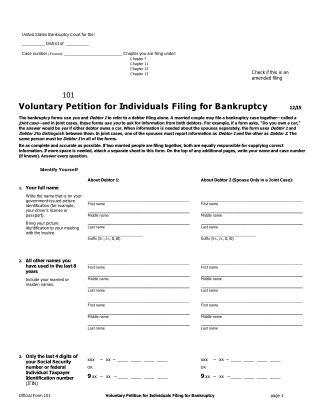
Official Form 101 is 9 pages long and is used in Chapter 7 and Chapter 13 cases. This guide describes the 06/24 revision, the date printed beside the form’s title. The federal courts publish the form and replace it when it changes, so their page always has the current one.
BK Prepare’s questionnaire builds the list of forms for a case from your answers, and includes this one when it applies.