In short
Schedule A/B is the inventory. It’s the longest of the schedules because it asks about every kind of property there is, one category at a time, from a house down to cash on hand.
The values on it are current values, before any loan against the property and before any exemption. Loans go on Schedule D and exemptions on Schedule C, and both of those forms point back to the lines of this one.
Who files it
Every individual debtor, in Chapter 7 and Chapter 13.
What it asks
Part 1: Describe Each Residence, Building, Land, or Other Real Estate You Own or Have an Interest In
Each property, what kind it is, who has an interest in it, and its current value.
Part 2: Describe Your Vehicles
Cars, trucks, motorcycles, boats, trailers and other vehicles, including ones someone else drives.
Part 3: Describe Your Personal and Household Items
Furniture and household goods, electronics, collectibles, sports and hobby equipment, firearms, clothes, jewelry and pets.
Part 4: Describe Your Financial Assets
Cash, bank accounts, investments, retirement accounts, security deposits, tax refunds owed to you, support owed to you, insurance policies, and claims you have against other people.
Part 5: Describe Any Business-Related Property You Own or Have an Interest In
Accounts receivable, equipment, inventory and similar business property.
Part 6: Describe Any Farm- and Commercial Fishing-Related Property You Own or Have an Interest In
Animals, crops, equipment and supplies.
Part 7: Describe All Property You Own or Have an Interest in That You Did Not List Above
A catch-all for anything the earlier parts didn’t cover.
Part 8: List the Totals of Each Part of this Form
The totals that carry over to the summary.
When it’s filed
It’s filed with the petition, or within 14 days after it. That’s the deadline Bankruptcy Rule 1007(c) sets for the schedules and statements.
Related forms
- Schedule C: The Property You Claim as Exempt (Official Form 106C)
- Schedule D: Creditors Who Have Claims Secured by Property (Official Form 106D)
- Summary of Your Assets and Liabilities and Certain Statistical Information (Official Form 106Sum)
- Declaration About an Individual Debtor’s Schedules (Official Form 106Dec)
The official form
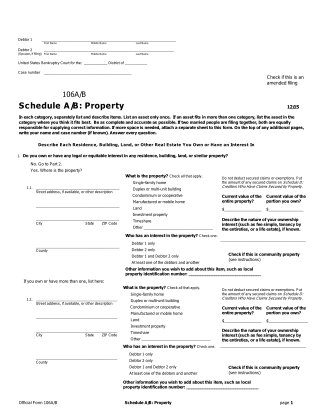
Official Form 106A/B is 10 pages long and is used in Chapter 7 and Chapter 13 cases. This guide describes the 12/15 revision, the date printed beside the form’s title. The federal courts publish the form and replace it when it changes, so their page always has the current one.
BK Prepare’s questionnaire builds the list of forms for a case from your answers, and includes this one when it applies.